
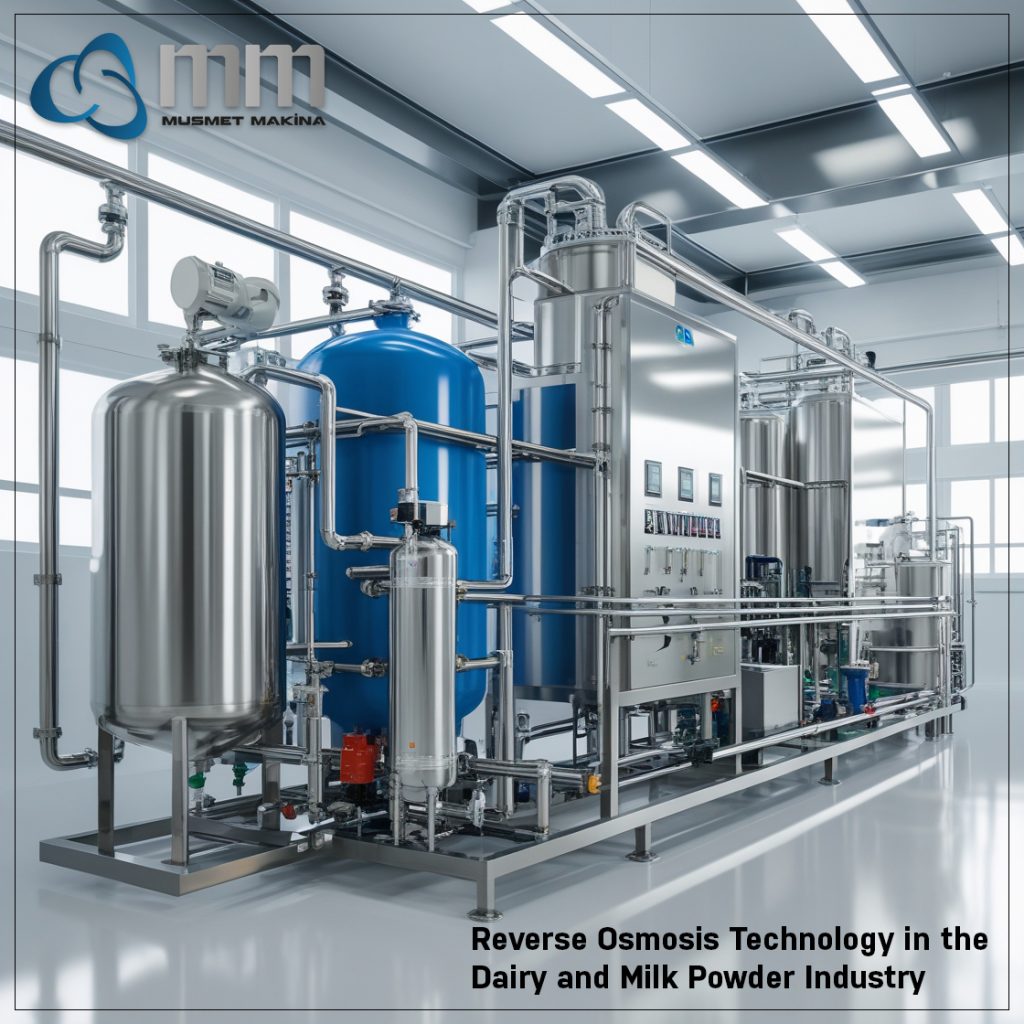
Reverse osmosis technology is an efficient membrane filtration method used in the dairy and milk powder industry to remove water from liquids and facilitate concentration processes. This technology works by passing liquid through a semi-permeable membrane under high pressure, separating dissolved substances from the water. It is particularly used in the dairy and milk product industry for the following purposes:
1. Milk Concentration
- Milk Powder Production: Reverse osmosis removes a significant portion of water from milk, simplifying the drying process in milk powder production and saving energy. By reducing the water content of the product entering the dryer, evaporation and drying costs are minimized.
- Protein Concentration: It increases the protein content of milk, which is advantageous for producing yogurt, cheese, or high-protein dairy products.
2. Whey Processing
- The technology is used to concentrate valuable components of whey, a byproduct of cheese production.
- Valuable substances like lactose and proteins are recovered for use in milk powder, sports nutrition, and other industrial products.
3. Wastewater Reduction and Recycling
- Reverse osmosis recovers water from liquid waste produced during manufacturing, promoting environmental sustainability and minimizing water consumption.
- The recovered water can be reused in cleaning or cooling processes within other production stages.
4. Membrane Characteristics and Filtration Process
- Membrane Structure: Reverse osmosis membranes are designed to allow water molecules to pass through while retaining larger molecules (proteins, fats, salts, etc.).
- Pressure Application: A typical operating pressure of 30–60 bars ensures the concentration of solids (cations, anions, proteins) in milk as water is filtered out.
Advantages
- Energy Efficiency: Reduces energy consumption compared to traditional evaporation methods.
- Temperature Control: Operates at low temperatures, preserving the natural qualities of milk or whey.
- Eco-Friendly: Promotes sustainability with lower energy and water consumption.
Disadvantages
- Systems operating under high pressure require regular maintenance and the use of high-quality membranes.
- Hard water and mineral deposits can shorten the lifespan of membranes, necessitating the integration of pre-treatment systems with reverse osmosis systems.
Applications
- Milk Powder Production Plants: Concentrating milk for energy savings before drying.
- Cheese Production Plants: Processing whey.
- Sustainable Operations: Recycling and reusing wastewater.
At Musmet Makine, we provide detailed solutions for reverse osmosis systems and their integration into the dairy industry. Contact us for more information about process design and equipment selection.