
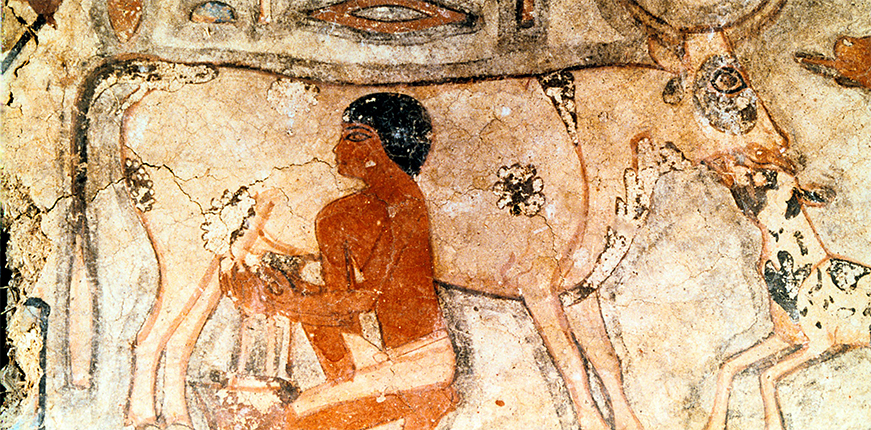
Milk is one of humanity’s oldest food sources, with origins tracing back to the beginnings of agriculture and animal husbandry. Around 8000-9000 BC in the Middle East, people began domesticating animals and using their milk. The domestication of cows, goats, and sheep introduced milk as a regular part of the human diet.
In ancient civilizations like Egypt, Mesopotamia, and Greece, milk also held a significant place. For instance, in Mesopotamia around 3000 BC, we find the earliest records on how to process milk. To store and preserve milk, products like yogurt and cheese were developed, transforming milk into a more durable form that could be kept as food for longer periods.
During the Roman Empire, milk and dairy production increased, and this culture spread across Europe. However, it was eventually understood that consuming raw milk could lead to health issues. In the 19th century, Louis Pasteur developed the method of pasteurization to eliminate harmful bacteria in milk. This process made milk consumption safer and revolutionized the dairy industry.
With industrialization in the 20th century, modern methods in milk production were introduced. Cooling systems, processing technologies, and hygienic packaging methods allowed milk and dairy products to reach a wider audience. Today, the milk industry is supported by advanced technologies to provide safe products with high nutritional value.