
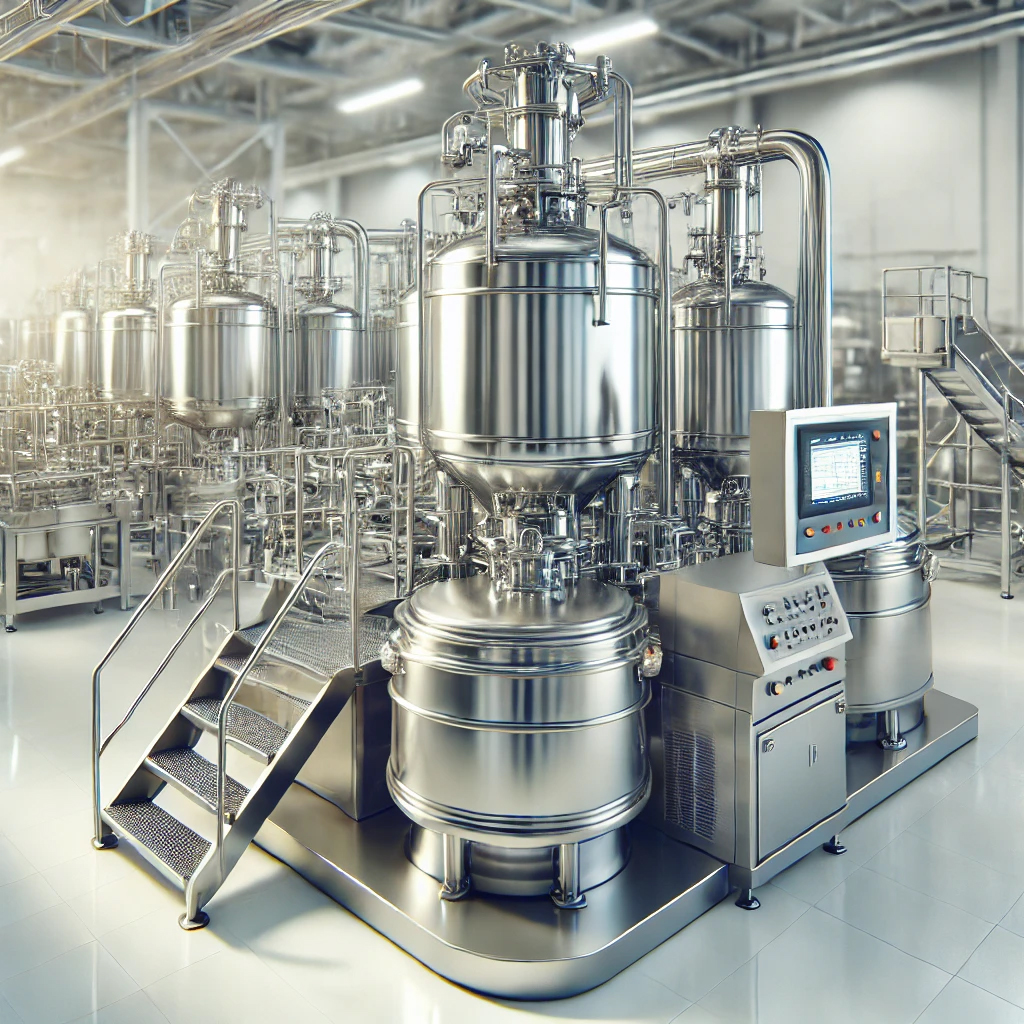
Cheese processing machine design and production focus on factors such as hygiene, efficiency, durability, and meeting customer requirements. Here are the main points to consider in this process:
1. Hygiene and Food Safety
- Material Selection: All surfaces in contact with food must comply with food safety standards, such as stainless steel.
- Easy Cleaning: Machines should be designed for easy cleaning and support CIP (Cleaning-In-Place) systems.
- Leakage Prevention: High-quality seals and connections must be used to prevent leaks.
2. Efficiency and Performance
- Energy Saving: Systems that reduce energy consumption and support environmental sustainability should be prioritized.
- Automation: Automation systems should be integrated for process control and traceability.
- Capacity Suitability: Solutions should be tailored to accommodate various production capacities.
3. Modularity and Flexibility
- Meeting Customer Needs: Machines should be designed to produce various cheese types (e.g., white cheese, cheddar, ricotta, etc.).
- Ease of Upgradability: Modular designs should be adopted to accommodate future needs.
4. Durability and Longevity
- High-Quality Materials: Corrosion-resistant and durable materials should be used.
- Vibration and Wear Resistance: Mechanical components should be optimized for high durability and long-term performance.
5. Safety
- Operator Safety: Features such as smooth edges, emergency stop buttons, and user-friendly control panels should be included.
- Compliance with CE and ISO Standards: Machines must be manufactured in accordance with international safety and quality standards.
6. Process Optimization
- Temperature Control: Ensure uniform heat distribution and precise temperature control.
- Time Management: Designs should save time at every stage of the process.
7. Technical Support and Spare Parts
- Ease of Maintenance: Components should be easily accessible to facilitate quick interventions.
- Spare Parts Supply: Spare parts should be readily available.
8. Environmental Sustainability
- Waste Management: Minimize waste generation during the process.
- Water and Energy Efficiency: Systems that consume less water and energy should be designed.
By adhering to these criteria, it is possible to design and produce highly efficient, durable, and hygienic cheese processing machines.