
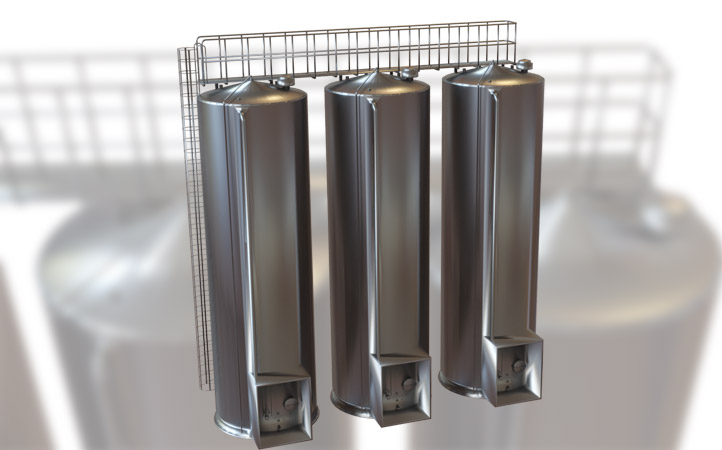
Dairy Tanks Manufacturing
Production Process of Storage and Processing Tanks in the Dairy Industry
The storage, cooking, processing, cooling, and transfer tanks specially produced for the dairy industry are designed and manufactured through a meticulous process. These tanks, which preserve the quality, hygiene, and durability of milk and dairy products, are produced within the framework of hygiene, durability, energy efficiency, and food safety requirements. Here are the main steps followed in the production process of these tanks:
1. Design and Planning
The first step in the production process is to create a customized design according to customer requirements. The features such as insulation, mixing, or temperature control systems required for the tank’s usage and capacity are detailed during this design phase. Functional and energy-saving features are emphasized to offer customer-specific solutions.
2. Material Selection and Quality Control
Special materials like stainless steel, which meet hygiene standards and ensure long-lasting durability, are selected. These materials are essential for the safety and quality of dairy products. Priority is given to durability and food safety in material selection; the steel plates used undergo various quality control tests throughout the process.
3. Cutting and Shaping
The selected steel plates are cut according to the design plan using CNC cutting machines and then shaped. Automated machines and robotic systems ensure precise preparation of the parts. In this step, parts are created to the desired size and specifications and prepared for assembly.
4. Welding and Assembly
The shaped parts are joined through welding. The welding process is performed in accordance with food hygiene standards, and the welded surfaces are thoroughly cleaned. Then, various control and tests ensure the durability and leak-proofing of the weld points.
5. Surface Treatment and Insulation
After welding, special surface treatments are applied to maintain the hygiene and cleanliness of the surfaces. Polishing or sandblasting processes are used to treat the internal and external surfaces of the tanks. If the tank requires cooling or temperature control, insulation is applied at this stage. The insulation material ensures that the dairy products in the tank are unaffected by temperature changes.
6. Testing and Quality Control
The tanks, which have undergone assembly and surface treatments, undergo quality control procedures. Various tests, such as leak-proofing, durability, and hygiene checks, are conducted to verify that the products meet quality standards. In specialized processing tanks, systems like mixing mechanisms are also tested for functionality.
7. Delivery and Installation
Finally, tanks that pass the tests are packaged and shipped to the specified facility. If requested, installation support is provided to ensure proper operation of the tanks.
This production process aims to maintain the quality and safety of milk and dairy products while maximizing customer satisfaction. High hygiene standards, energy efficiency, and durability are the key features that make these tanks a preferred choice in the dairy industry.